Growing hardy Orchids
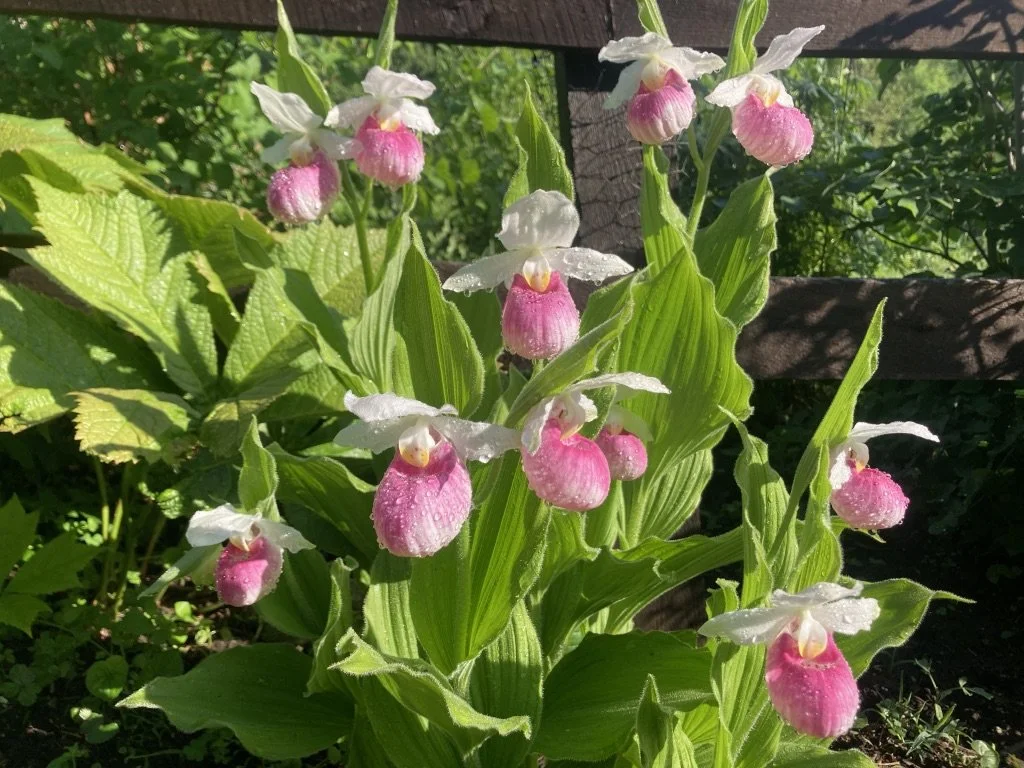
One of the flowering treasures of early summer in Vermont are the native Cypripediums, or hardy orchids. These are what are known as terrestrial orchids meaning they grow in soil and die to the ground in winter. Many of the tropical orchids are epiphytic meaning they grow on other living things like trees. There are around 45 species of cypripediums worldwide fairly evenly distributed in the northern hemisphere and maybe 6 native to eastern North America.
I first saw this rare genus growing in a garden at Cady’s Fall Botanical Gardens. Don and Lela had been propagating them for years and had several clumps that were over 25 years old. With a little nudging and the information I needed I started propagating them in 2001. During the 19th and early 20th centuries nurseries filled their stores with wild harvested orchids slowly decimating populations around the world. The main reason for the excessive wild harvesting was that growing orchids from seed seemed impossible. Orchid seeds do not have an endosperm which is the food source for most germinating seeds. They rely on a complex relationship with soil microrhizzia to aid germination and is nearly impossible to replicate.
Maybe 50 or 60 ago horticulturists started to learn how germinate orchid seeds in a laboratory setting using a sterile medium. This, thankfully, has stopped most illegal harvesting and it is now fairly easy to get ethically produced orchids. It is with seedlings from a certified laboratory in North America that we have built our collection.
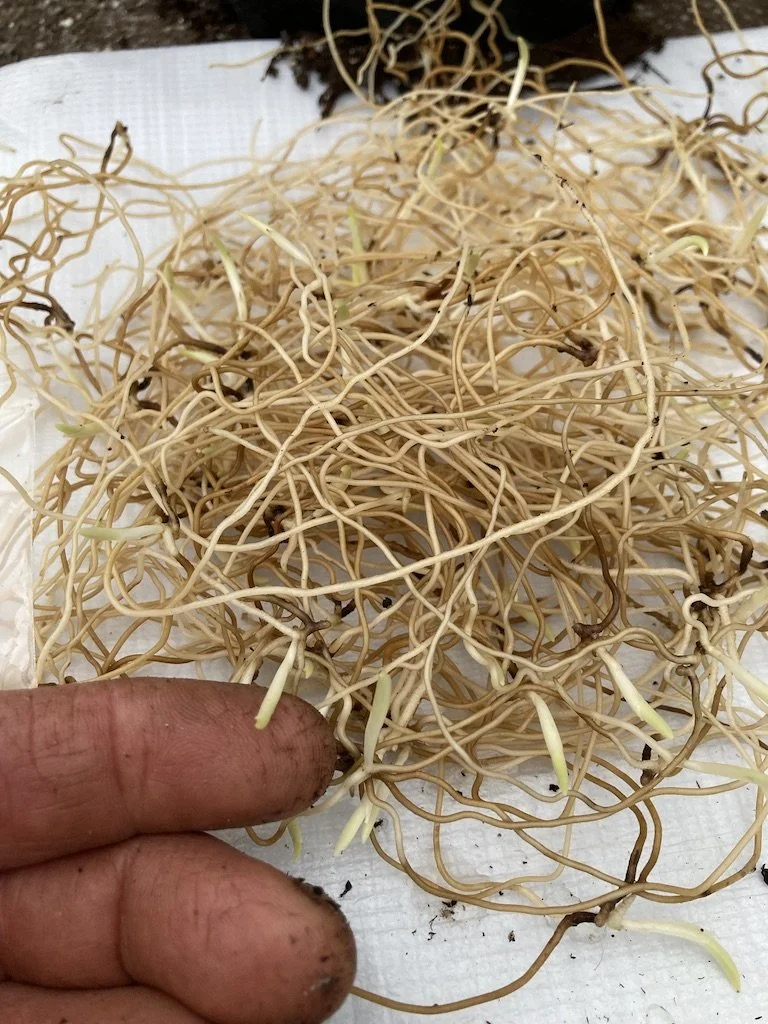
I receive the seedlings in the spring. They are grown out after germination in flasks in a sterile medium. They are fairly tender to start and if there are losses it usually happens at this time for me.
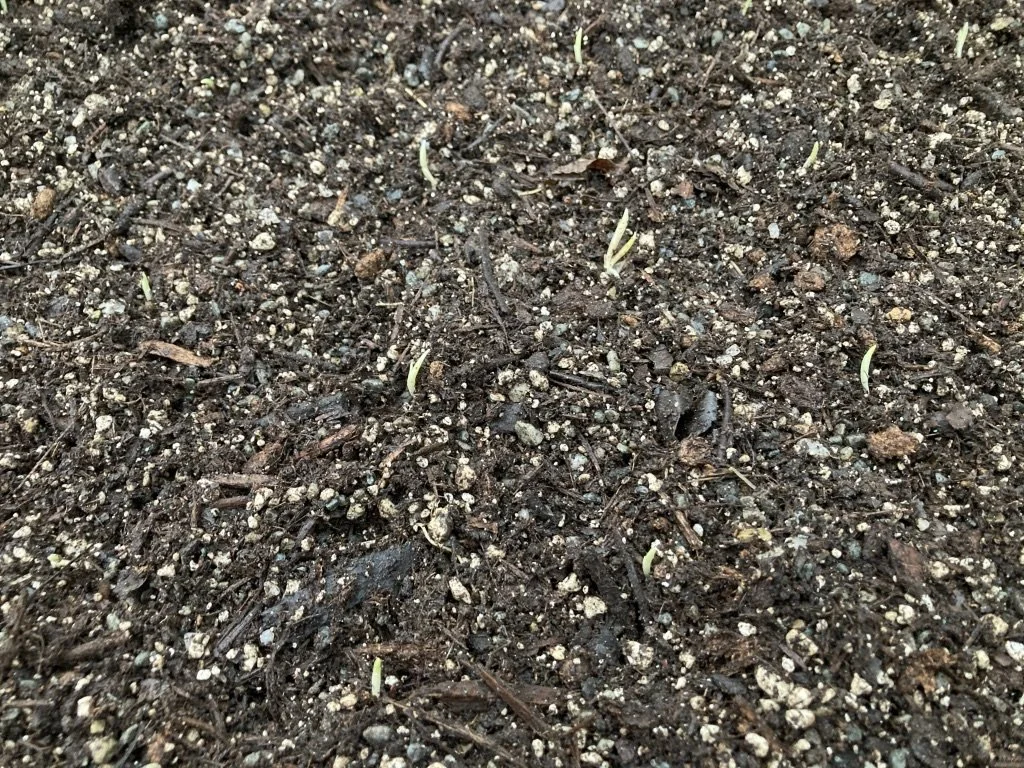
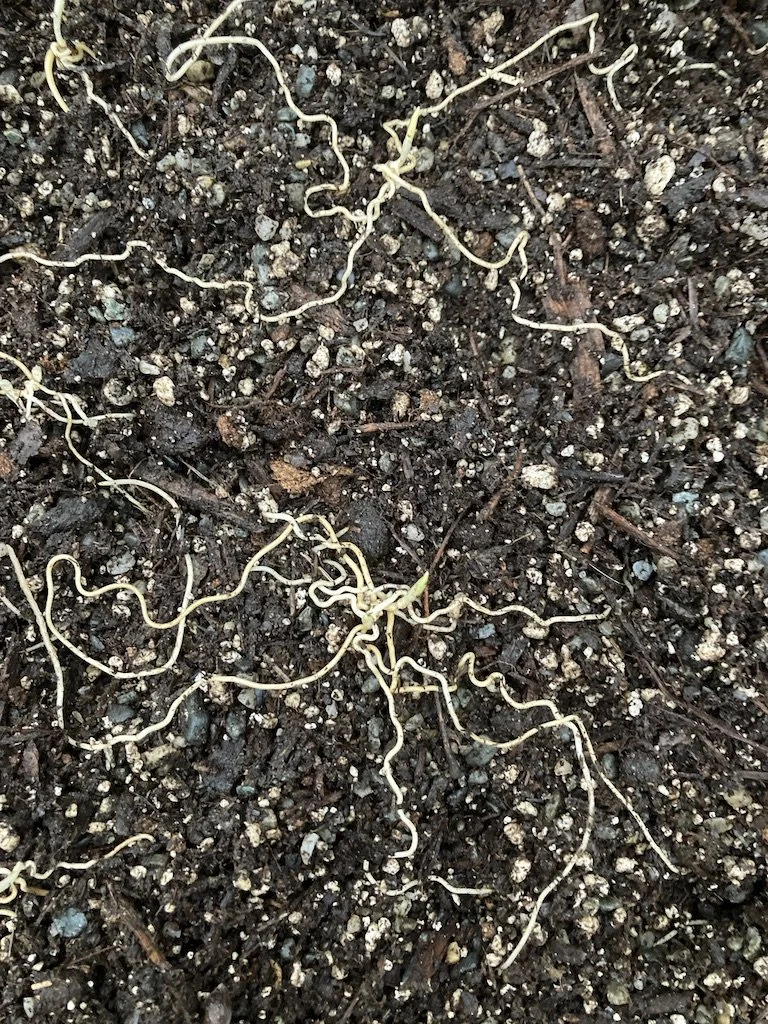
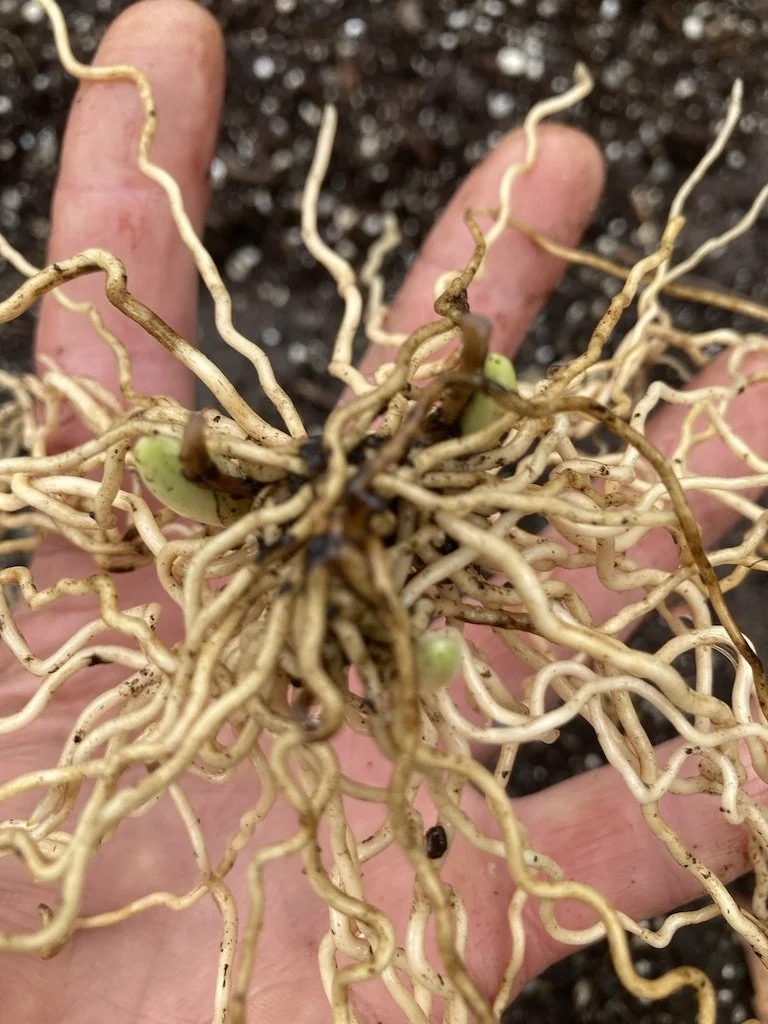
The roots are carefully untangled and laid out on the medium.
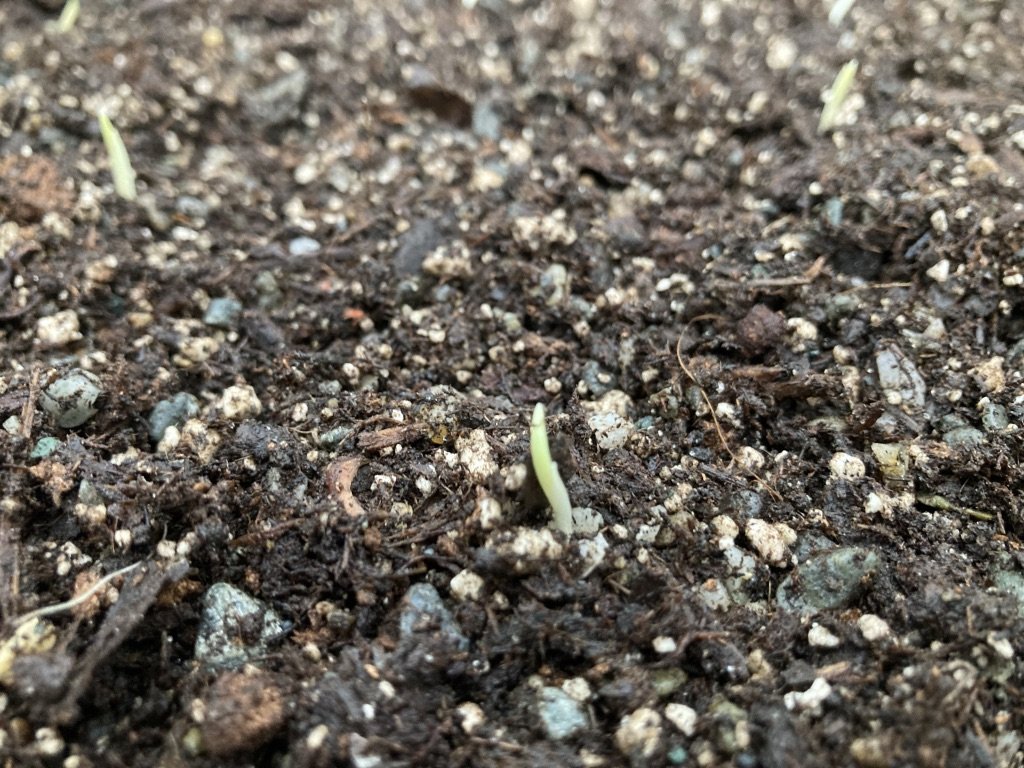
The tiny seedlings first emerging from a specialized, well drained soil mix. We have experimented with different mixes but are still refining it. Some growers use an entirely sterile medium and rely on steady liquid fertilizer through the growing season.
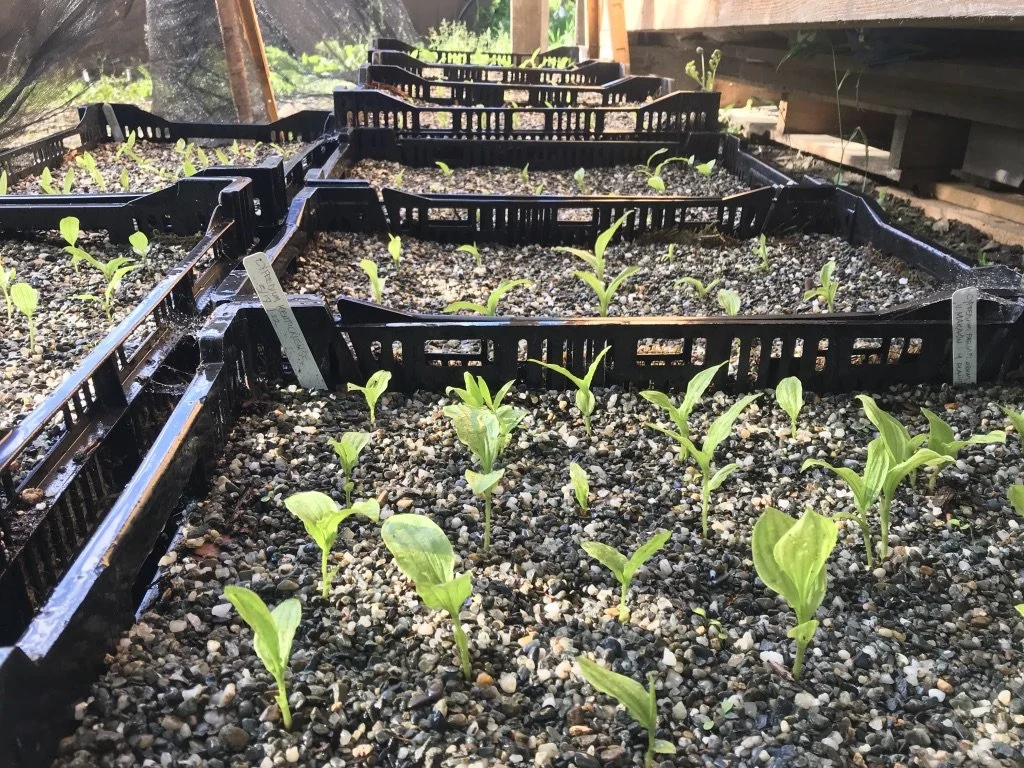
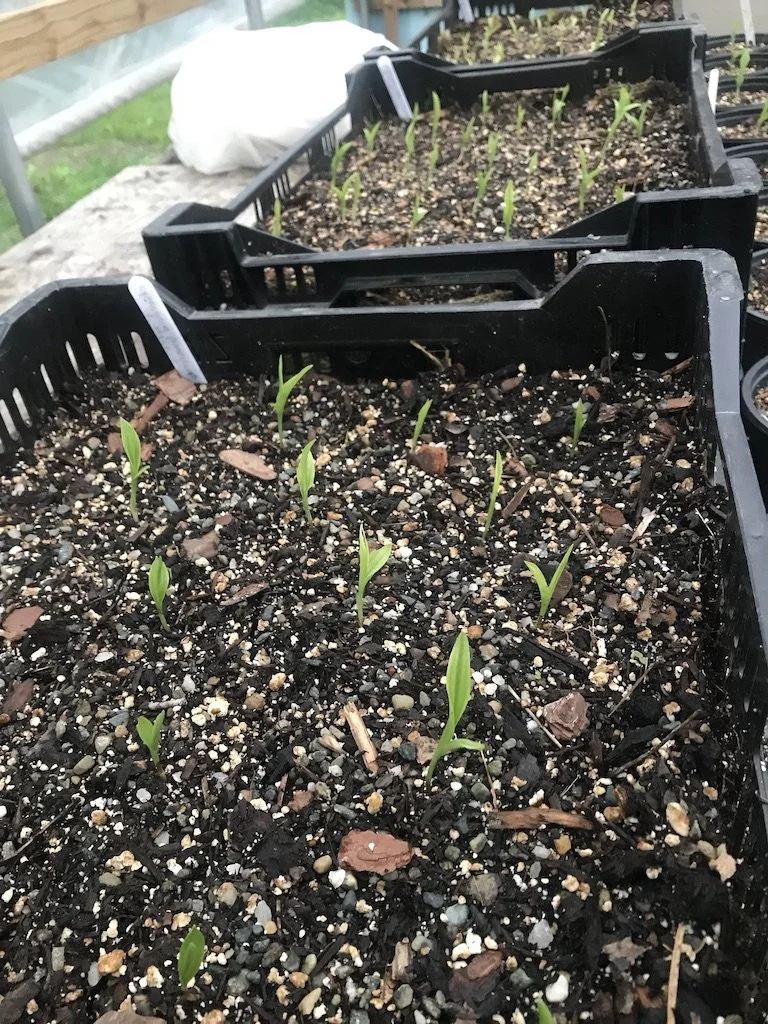
The seedlings are fairly vigorous and after a couple months are well emerged, green and growing well. Once the plants reach this point they are fairly likely to survive. The key is to keep them well fed and growing quickly. The leaves should look bright green with no yellowing.
We have focused on 5 species native to the eastern US. C. candidum, C. kentuckiense, C. parviflorum v. parviflorum, C. parviflorum v. pubescens and the famous C. reginae. Some of these species have large ranges from the southeast US to Alaska. They can fit into many garden settings and all of them have the potential to grow into large, long lived clumps if given the proper conditions.
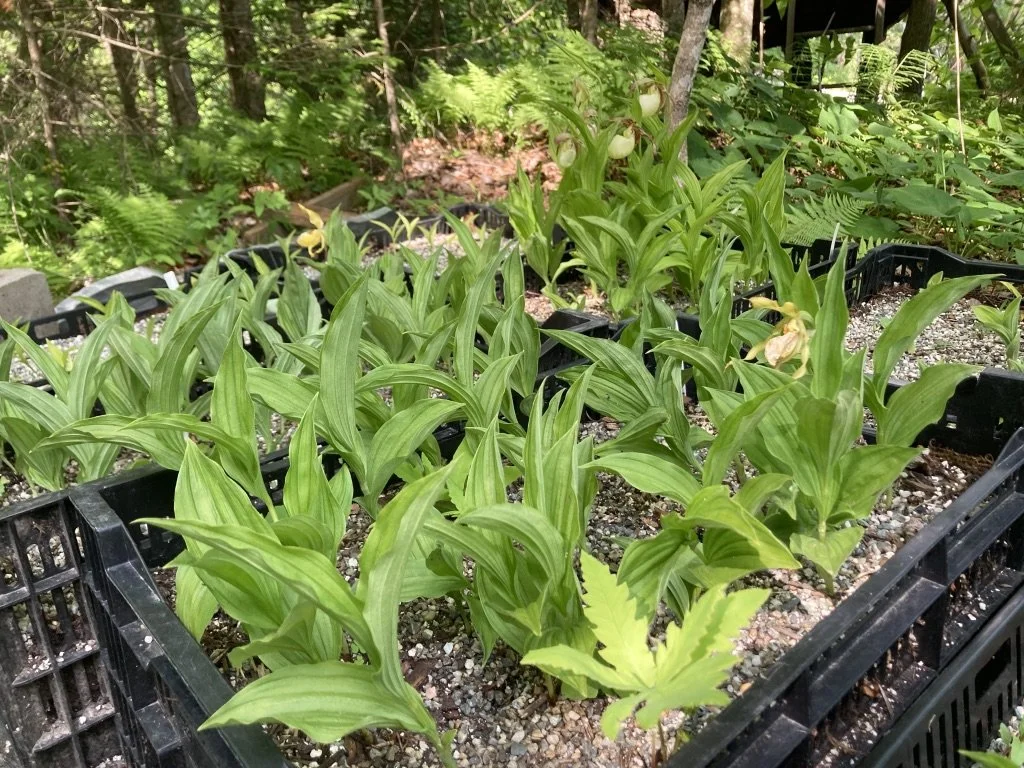
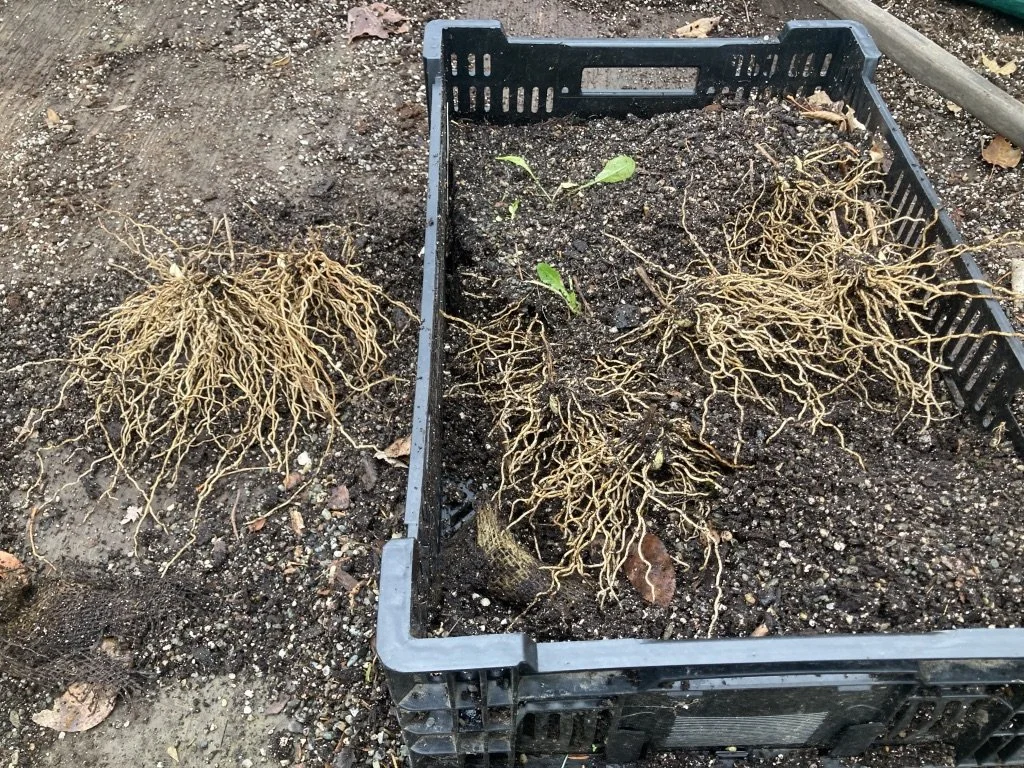
Lifting four year old dormant orchid plants in the fall of 2025. These plants will be potted up and be ready for sale. The plant on the right shows three well established crowns and will very likely flower first year planted.
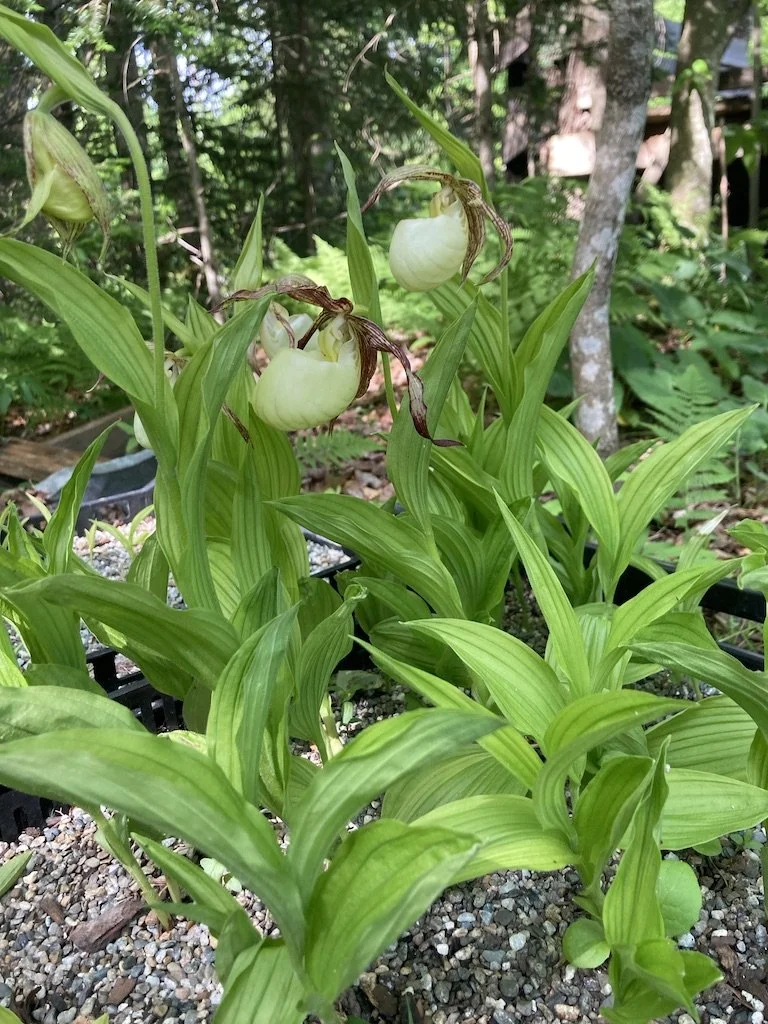
The seedlings after three years and the first year that they flowered. These plants are ready to be lifted out of the crates and potted into individual pots to be sold. This can happen either in the spring or fall.
Despite all the mystery and complex propagation, cypripediums are not that difficult to grow. With proper planting, the right location and average well drained garden soil amended with well rotted organic matter these native treasures will thrive for years. We send along careful planting instructions and what you need to know to keep your orchid expanding and thriving for years to come.