 Image 1 of 1
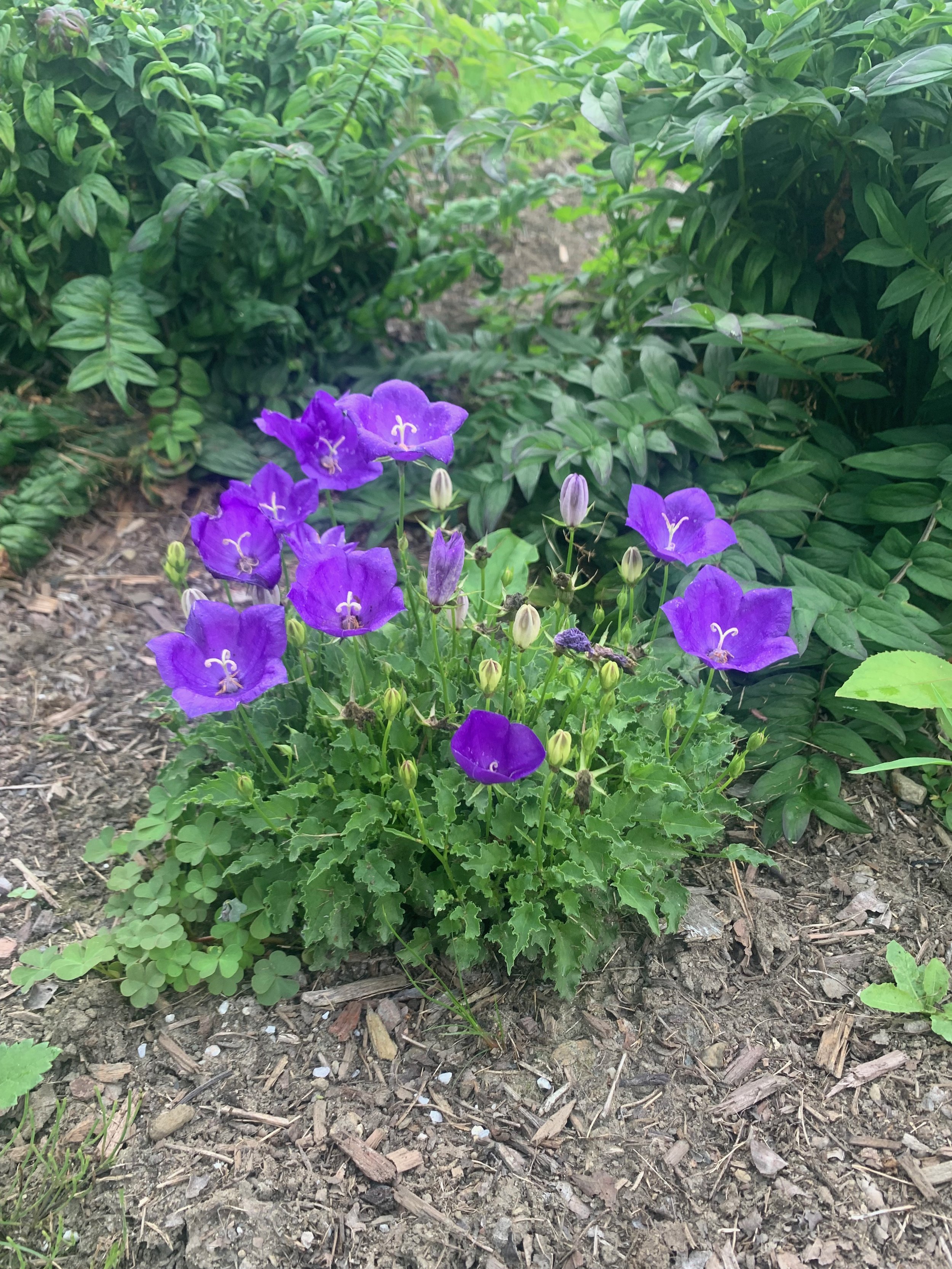
Campanula, or bellflower, is a massive genus of plants comprising more than 400 species worldwide. These well known plants with their delicate, nodding, bell shaped flowers have been a goldmine for gardeners because of their diversity, fitting into all sorts of perennial gardens. From tall ones with large nodding heads for the border to tiny pincushions that can cling to life in a pile of gravel. Most bloom June and July. They seem to do best, generally, with good drainage. We have several dwarf species listed below. Most of the best dwarfs demand a sunny rock garden setting and can be a bit fussy in our damp, humid climate. We continue to propagate other species always looking for another good one.
C. cochleariifolia - Creeping, tufted, solitary tiny blue bell flowers in summer, rock garden, moist, but well drained, sun.
C. persicifolia ‘Blue Bell’ - Peach-leaved bellflower, basal rosette of narrow leaves, 36” narrow stem with terminal, 2” bell flowers, mid-summer. Good cutflower. Sold in deep 6” pots.
C. portenschlagiana - Another low growing mound of evergreen foliage, deep purple flowers to 6”
C. rotundifolia - An adaptable plant with world wide distribution. In a rich garden in can get large with a mound of delicate foliage and blue bell flowers on wiry 12-18” stems. It will also grow in rock garden as a tamer plant.
C. sarmatica - A clump forming plant with wooly basal leaves. An unbranched stem to 12” bears lax, bell flowers along its length to 12”. Needs sharp drainage. I’ve lost them in the wrong spot. Sold in 4” deep pot.
We are currently building up our stock of “alpine” dwarfs. It’s been hard to find good ones for our climate.
Campanula, or bellflower, is a massive genus of plants comprising more than 400 species worldwide. These well known plants with their delicate, nodding, bell shaped flowers have been a goldmine for gardeners because of their diversity, fitting into all sorts of perennial gardens. From tall ones with large nodding heads for the border to tiny pincushions that can cling to life in a pile of gravel. Most bloom June and July. They seem to do best, generally, with good drainage. We have several dwarf species listed below. Most of the best dwarfs demand a sunny rock garden setting and can be a bit fussy in our damp, humid climate. We continue to propagate other species always looking for another good one.
C. cochleariifolia - Creeping, tufted, solitary tiny blue bell flowers in summer, rock garden, moist, but well drained, sun.
C. persicifolia ‘Blue Bell’ - Peach-leaved bellflower, basal rosette of narrow leaves, 36” narrow stem with terminal, 2” bell flowers, mid-summer. Good cutflower. Sold in deep 6” pots.
C. portenschlagiana - Another low growing mound of evergreen foliage, deep purple flowers to 6”
C. rotundifolia - An adaptable plant with world wide distribution. In a rich garden in can get large with a mound of delicate foliage and blue bell flowers on wiry 12-18” stems. It will also grow in rock garden as a tamer plant.
C. sarmatica - A clump forming plant with wooly basal leaves. An unbranched stem to 12” bears lax, bell flowers along its length to 12”. Needs sharp drainage. I’ve lost them in the wrong spot. Sold in 4” deep pot.
We are currently building up our stock of “alpine” dwarfs. It’s been hard to find good ones for our climate.